
2016-chevrolet-silverado-2500-heavy-duty-mo-performance-980x476-02

Keep Your Fuel System Flowing In the Cold Months

With Winter approaching and temperatures beginning to drop, it’s time to start thinking about how to keep your diesel fuel flowing well through the Winter months. If proper precautions are taken, you can prevent issues that may occur when diesel fuel is left cold and alone.

What Happens to Diesel Fuel in Cold Temperatures?

When anything begins to cool, the molecules start to slow down, eventually freezing. For a quick science refresher, when water reaches 32 degrees Fahrenheit (or 0 degrees Celsius) it freezes and turns to ice. Coincidentally, at around 32º F and below, diesel #2 can begin to crystallize and cloud your tank – this is known as the cloud point and trouble is on the horizon. So when your windshield starts to get frosty, keep in mind your diesel fuel could be next in line.

Pour Point – Fuel Gelling

Diesel fuel contains paraffin, an oily liquid also used as an ingredient to make candles. You can probably see where this is going. When outside temperatures dip 10-20º F below the cloud point, the cooled diesel fuel is going to turn your fuel filter and system into its best impression of a candle. This state is known as the pour point and is widely referred to as fuel gelling. When your diesel fuel begins to gel, it stops flowing freely through your fuel system, and your injectors may not be able to deliver adequate fuel. Your vehicle may not perform well, or in some instances may not run at all.

Be Proactive – Use Additives

Using additives can effectively change the pour points of your diesel fuel, allowing you to brave the cold. If you live in an area that regularly experiences below freezing temperatures, it’s best to start using additives as soon as the temperature begins to drop into range. Adding mixtures, such as ones sold by Stanadyne, can reduce pour points by as much as 40º, giving you the confidence you need to make the haul in the dead of winter.

Use Diesel #1 or “Winter Blend Diesel”

If your fueling station of choice offers diesel #1 during the winter months, this is can be a good temporary alternative, and can also be mixed with existing diesel #2 in your tank to help lower the pour point. Diesel #1 has cloud and pour points in the -40º F range, helping to prevent fuel gelling in the winter. Keep in mind that diesel #1 has reduced lubricating properties and should not be used long-term as it can cause premature wear to your fuel system. Many fuel stations also offer a “winterized blend” of diesel #1 and #2 which can be an option for those cold months. Both of these options should be considered temporary, as both can result in decreased lubricity and reduced fuel economy.

Stay Warm Out There

Whether you use additives or a winter fuel blend in your tank, make sure you pay attention to the weather, so you can spend more time on the road and less time in the garage.

Stay warm out there!


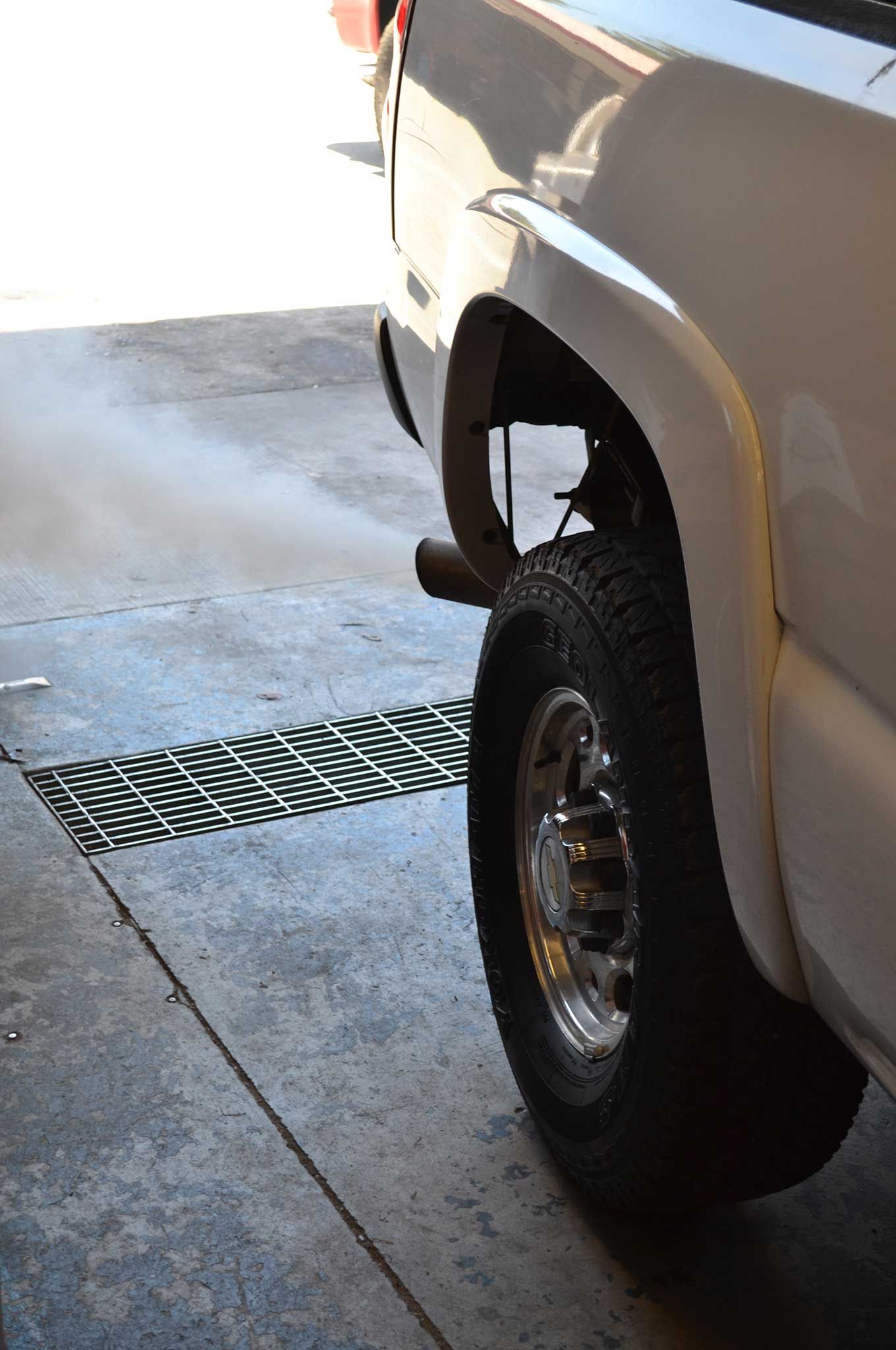
White smoke from an LB7 Duramax engine often indicates faulty injectors.

We’ve heard of rollin’ coal, but rollin’ snow? Not a good sign.

Blowing white smoke is a red flag for your diesel engine, yet we see this happen all the time to our customers.

In many cases, white smoke emanating from the tailpipe (often at idle once the engine reached operating temperature) typically means a worn out injector.

Now this isn’t always the case, but after some trouble shooting we’re usually the go-to shop when diesel drivers need refurbished, rebuilt, or new injectors.

WHITE SMOKE

White smoke often occurs when there is either too much fuel being injected into the combustion chamber, or not enough heat to burn the fuel.  Un-burned fuel travels through the exhaust system & exits out the tailpipe which will produce a scent of rich, un-burnt diesel. Other causes of white smoke include lack of compression, or water/coolant entering the combustion chamber.

BLACK SMOKE

Black smoke indicates excess fuel is being injected into the combustion chamber and/or not enough air is present.   This can be caused by worn/leaking injectors or restrictions in the air intake system.

BLUE SMOKE

Blue smoke is normally the result of engine oil entering & burning inside the combustion chamber.  This is most often caused by low compression, or worn piston rings.

But what we see more often than not are issues related to worn injectors.

Once the problem injector(s) are confirmed (by checking the balance rates and/or capping the feed line to injectors one by one, or bench testing), it’s time to get it fixed.

As we’ve written previously, we test the heck out of injectors with state-of-the-art equipment you won’t find anywhere else. We also stand behind all of our injectors with the best expanded warranty in the business.

When you are shopping for replacement injectors, it’s best to go with a shop that has experience & utilizes the latest testing equipment.

Rest assured, InjectorsDirect.com has all the equipment necessary to clean and accurately test common rail (Duramax and Cummins 2001-present, including piezo) and H.E.U.I. (Ford 7.3 & 6.0) injectors.

You can learn more on our injector testing equipment page, and we’re always happy to provide an accurate assessment of your injector performance, and honest advice on your best repair or replacement options for your budget.

We’ve been doing this since 2009, and have seen just about everything when it comes to failing fuel injectors.

So the last thing we’re going to do is blow smoke.

Contact us for more information, and we’ll get you back on the road again in no time.

diesel contaminated tipsFor diesel truck drivers, summer is our favorite time of year for four reasons: Road trips. Off-roading. Camping. And more camping.

I mean, is there really a better time of year to hit the road, or in a lot of cases, off road?

We think not.

With increased Independence Day travel right around the corner, it’s worth noting diesel prices remain low – which makes long road trips a lot more promising over the holiday weekend and the remainder of the year for that matter.

According to the U.S. Energy Information Administration, the retail price of diesel fuel, which averaged $3.83/gal in 2014, is projected to fall to an average of $2.88 a gallon in 2015 before rising to $3.12 a gallon average in 2016.

So the time is now to get in those long road trips.

Unfortunately, the summer is also when demand on diesel goes through the roof, and vendors are constantly looking for ways to improve their bottom line – particularly in the down market –by accepting lesser quality fuel into their tanks.

And research has shown that contaminated diesel fuel can put your engine at risk, destroying hundreds of thousands of engines and costing truck drivers millions in recent years.

So how can you help cut back on pumping contaminated fuel that puts your injectors and other engine parts in harm’s way?

Here are a few ways you can keep contaminated fuel out of your tank and help ensure your engine is running as efficiently as possible:

  • Change your fuel filter more often: a clogged fuel filter can destroy injectors and injection pumps and is one of the easiest preventative measures you can take this summer. (If you’re a Duramax driver, be sure to check out our Duramax Cat Fuel Filter Adapter, which replaces the inefficient 6 micron stock filter.)
  • Drive more frequently: While road tripping more won’t help you in the short term, it’s good to keep your diesel (particularly for the lesser-used toys in your collection) running regularly to avoid sediment and gumming to form and eventually block your fuel filter.
  • Pump at truck stops: Major truck stops are a good source of fuel because quality control is usually better when you have trucks with that much storage pumping fuel. In the word-of-mouth trucking industry, the last thing a station operator wants to have happen is to have a major trucking fleet get bad fuel that leads to a major issue.
  • When you see a tanker filling gas station tanks, keep driving: Now, some folks suggest this is an old wives’ tail, and it could be. But when fuel is getting dumped into a gas station’s tanks at that high volume, there’s not question fuel is swirling and any contaminants are getting mixed around. In fact, I was just at a station near our shop this week that was receiving fresh tanks of gas, and this particular station actually closed down its pumps. Either way, my philosophy has always been to fuel up in the early morning or evening once the dust has a chance to settle.

Looking for more info on diesel fuel quality?

Here’s another post on some reasons why diesel fuel injectors go bad.

And feel free to share your diesel fuel stories on our Facebook Page and share your tips for avoiding bad diesel at the pump.

Good luck on the road this summer!